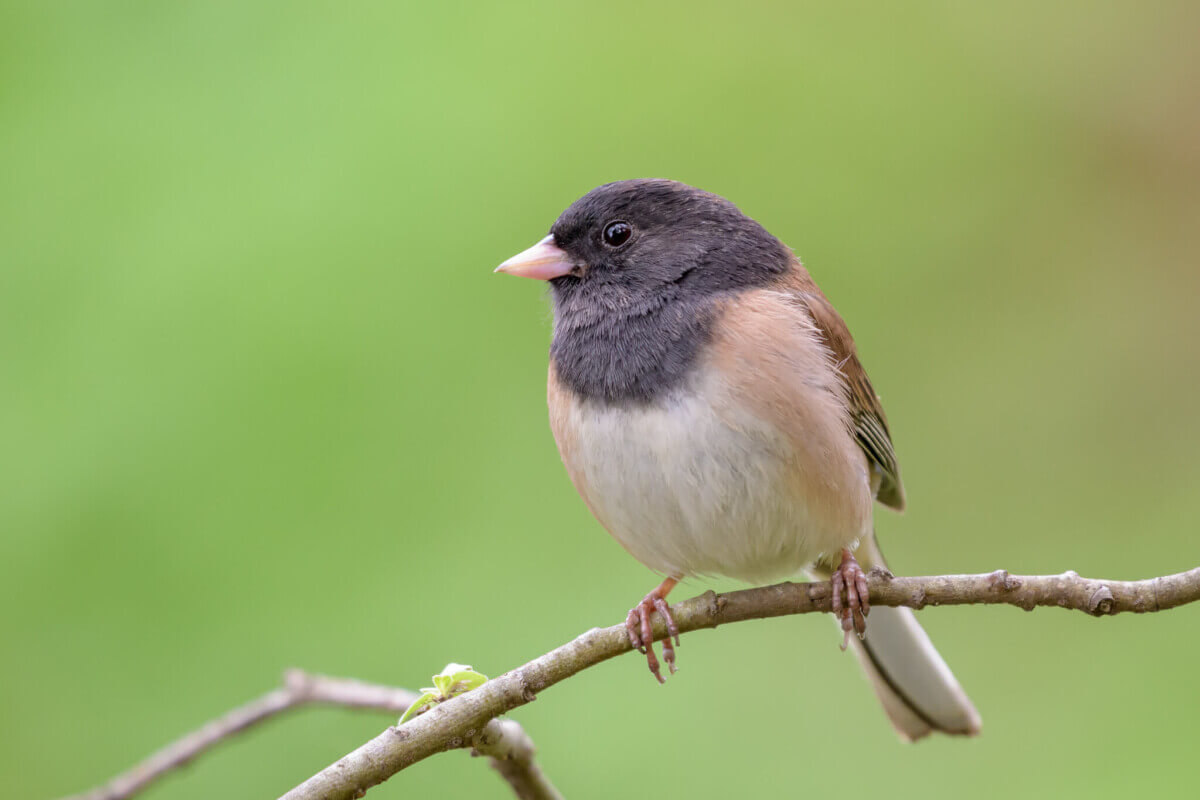
Dark-eyed junco. (credit: Becky Matsubara/Flickr/UCLA)
LOS ANGELES — When the COVID-19 pandemic forced UCLA to switch to remote instruction, the campus became quieter and less populated. Still, it wasn’t deserted by all inhabitants. A group of approximately 300 dark-eyed juncos, birds that have made the university grounds their home for about two decades, continued to thrive. Now, a recent study finds birds may be changing their opinion of humans thanks to all that time apart.
Seeing a unique research opportunity, UCLA scientists, who had previously been studying these birds’ fear and aggression levels in urban settings, embarked on an experiment. They sought to understand: with reduced human interaction for a year, would the juncos become more apprehensive when the campus buzzed back to life?
Their findings went against their initial assumptions. Once campus life returned to normal, the birds acted “drastically less fearful” of humans, according to the study.
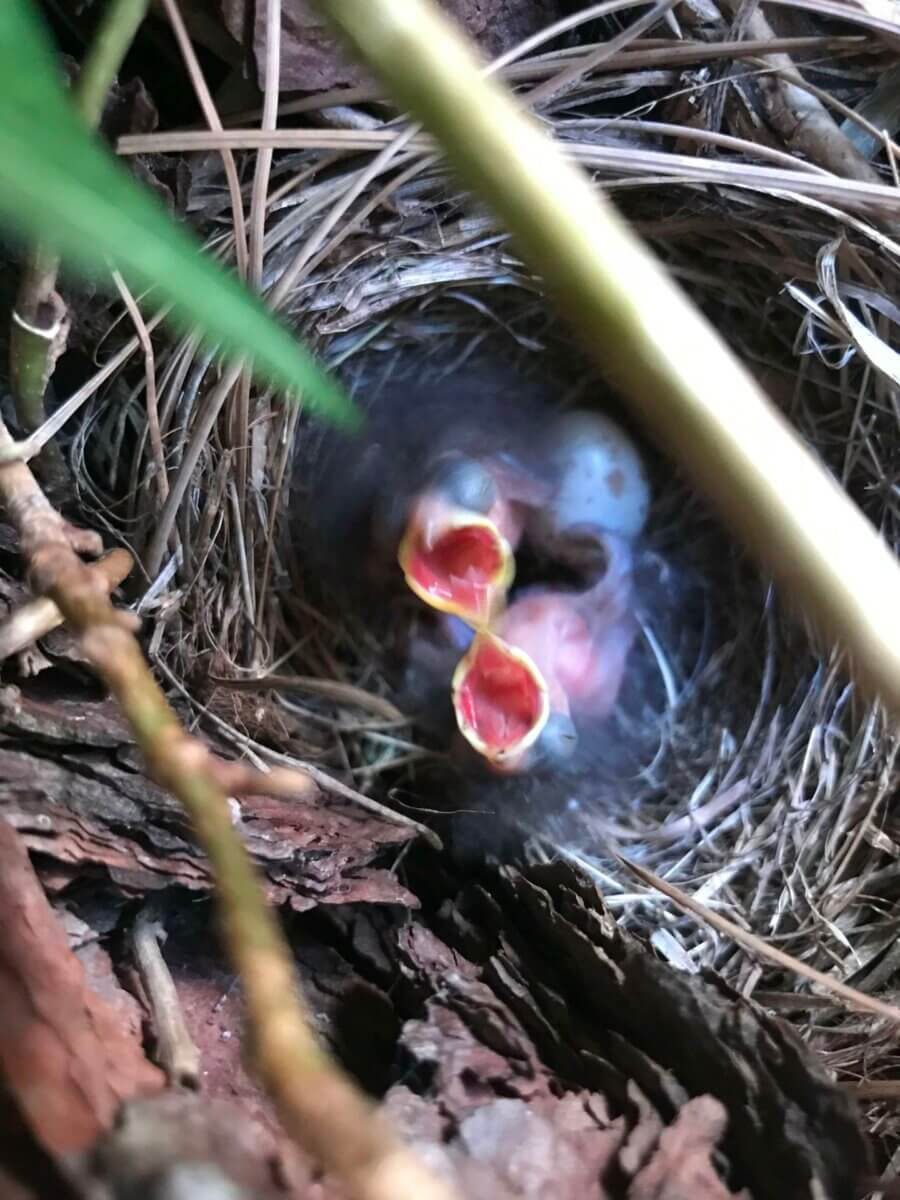
To gauge this fear response, the team measured the distance a person could approach the bird before it flew off. Pre-pandemic data from 2018 and 2019 showed that juncos would typically fly off when someone approached within about 65 inches. By 2022, when campus activity largely resumed, this distance dropped to just 39 inches.
What makes this observation intriguing is that the birds, whether born during the pandemic or before it, showed no significant difference in behavior. This was determined using identification bands on the juncos’ legs.
The dark-eyed juncos are especially interesting subjects because they primarily feed and nest on the ground, which results in frequent human encounters. Earlier research indicated that the campus birds were already more at ease with humans than their counterparts in less urbanized areas.
Study author Eleanor Diamant, former UCLA doctoral student and current postdoctoral scholar at Ben Gurion University of the Negev in Israel, highlighted that the current findings don’t align with the predominant biological theories about how wild birds adapt to urban environments. Neither the habituation theory – which posits birds become less fearful through frequent human interaction – nor the idea that urban birds are inherently less scared, seem to fit the junco’s observed behavior during the campus closure and reopening.
“If less fearful birds had chosen to live on campus in the first place, we would have expected their fear response to be essentially unchanged. If they were habituated, we would have thought they’d become more fearful during the closure and then less fearful after, or not shift their behavior at all,” Diamant says in a university release. “But these birds didn’t shift fear response with humans absent and they shifted toward much less fearful after humans came back.”
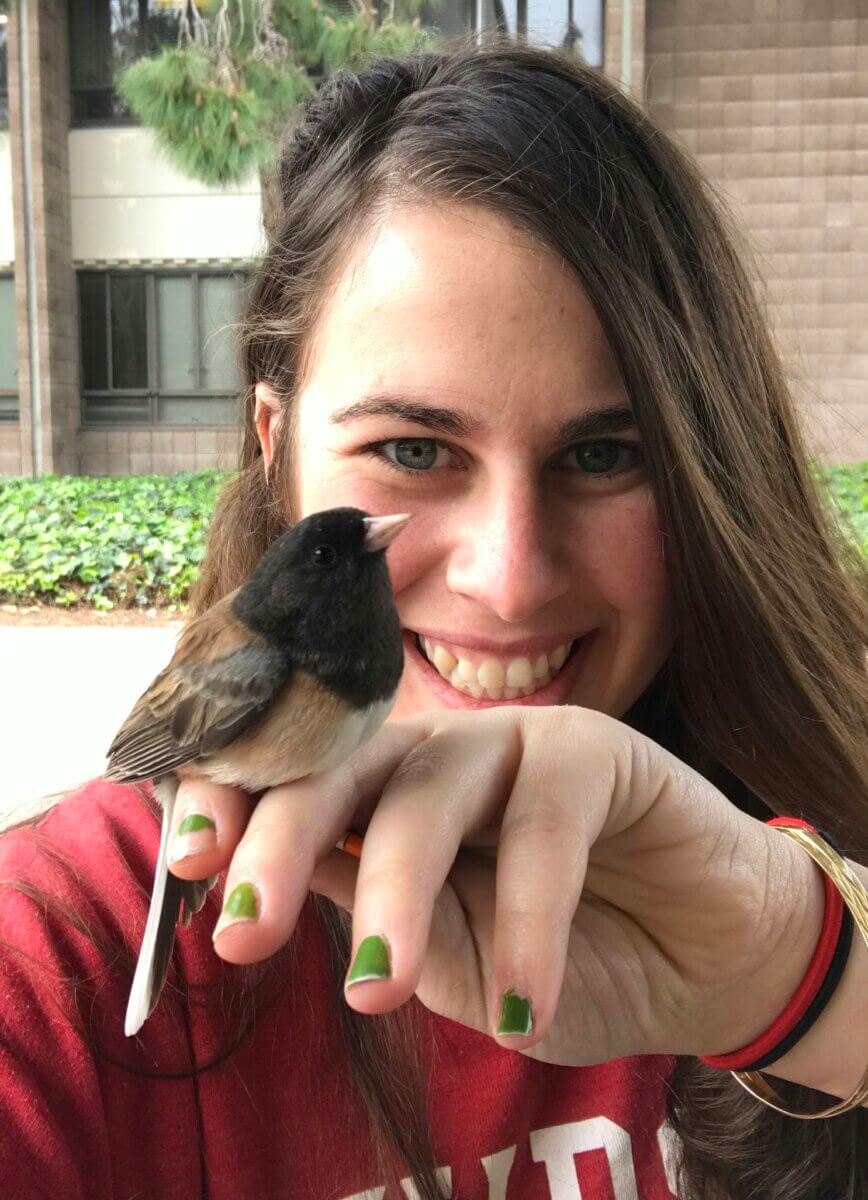
Pamela Yeh, a UCLA professor, and the study’s senior author, proposed two explanations. Either the birds’ fear continues to decrease with each new event or, after diminishing, it resets to a standard level.
“The effects of humans on wild animals are really complex and what we expect isn’t always what we get,” notes Yeh. “So our research shows both the complexity of the juncos’ response to humans and of their response to other changes.”
A striking element of the study is the reflection on the broader challenges faced by North American birds. It is estimated that the continent has nearly three billion fewer adult birds than in 1970, with the dark-eyed junco population dropping by about 175 million. This decline has largely been attributed to human disruptions in their natural habitats.
The research not only underscores the multifaceted reactions animals exhibit toward human behavior but also emphasizes the potential of such unforeseen global events to illuminate these complexities.
“For me, the takeaway is that there’s so much complex animal behavior that we don’t know about, even though they are our neighbors in cities,” concludes Diamant. “There are these surprising reactions animals have to collective human behavior. We might not know what they are because we can’t test for them, but only these kinds of massive and unexpected events like the pandemic bring them into focus.”
The study is published in the journal Proceedings of the Royal Society B Biological Sciences.


