

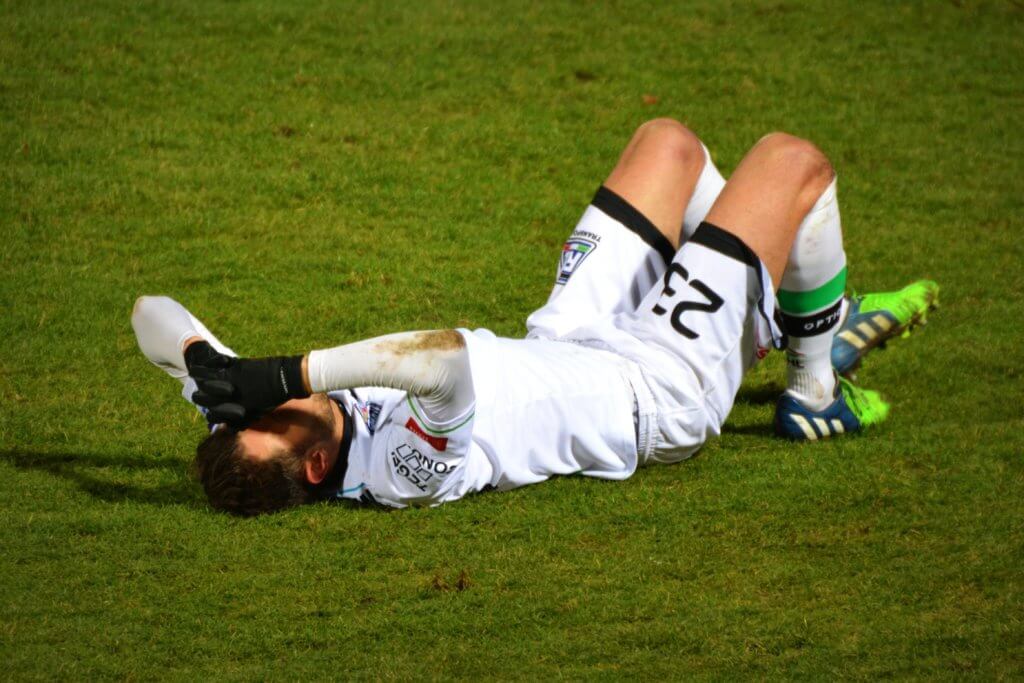
Football players playing on field. (Courtesy Chris Chow on Unsplash)
ANAHEIM, Calif. — Playing sports can be dangerous. However, one study notes that the playing surface an athlete is standing on can significantly impact their risk of suffering a concussion. A researcher at the University of Hawai’i explains that playing on synthetic turf fields can increase the risk of a serious head injury in comparison to playing on natural grass.
The study, presented at the 2022 American Academy of Pediatrics National Conference & Exhibition, highlights the importance of considering the safety of the playing surface itself in athletics.
Ian Chun, a medical student at the University of Hawai’i, conducted the study. He compared the impact deceleration of manikins on natural grass and synthetic turf high school football fields. The findings showed that synthetic turf fields had a greater impact on an athlete’s ability to slow down, indicating an increased risk of injuries due to contact with the playing surface.
While injuries in sports have always been a part of the game, the focus on player safety has shifted in recent years. The study emphasizes the need to consider the spaces where we play and their impact on athlete safety. Synthetic turf fields, although favored for their lower maintenance costs, have been associated with ankle and knee injuries, and now, a potentially higher risk of concussions.
“The emphasis on player safety is especially important for children as injuries sustained in developing adolescence may have longer-term impacts and unforeseen consequences,” Chun explains in a media release.
What are the symptoms of a concussion?
Symptoms of a concussion can vary depending on the severity of the injury and the individual affected. They can be both physical and cognitive in nature and may appear immediately following the injury or develop over hours or days. Some common symptoms of a concussion include:
- Headache: This is often the most common symptom, ranging from mild to severe.
- Confusion or disorientation: The person may have difficulty remembering the events surrounding the injury or feel “foggy.”
- Dizziness or balance problems: Individuals may experience unsteadiness or have difficulty maintaining their balance.
- Nausea and vomiting: Concussions can cause feelings of nausea, and some people may vomit.
- Fatigue or drowsiness: A person may feel unusually tired or have difficulty staying awake.
- Blurred or double vision: Vision problems, including difficulty focusing, can be a symptom of a concussion.
- Sensitivity to light and noise: Bright lights or loud noises may cause increased discomfort after a concussion.
- Sleep disturbances: Trouble falling asleep, staying asleep, or experiencing changes in sleep patterns can occur.
- Memory problems or difficulty concentrating: People with concussions may struggle with short-term memory or have trouble focusing on tasks.
- Mood changes or irritability: Emotional symptoms, such as increased irritability, sadness, anxiety, or mood swings, can be associated with concussions.
- Ringing in the ears (tinnitus): Some individuals may experience a persistent ringing or buzzing sound in their ears
If you suspect a concussion, it’s important to seek medical attention immediately, as proper diagnosis and management are crucial for recovery. Symptoms can sometimes be subtle and may not appear immediately, so it is essential to monitor the individual closely in the hours and days following the injury.


