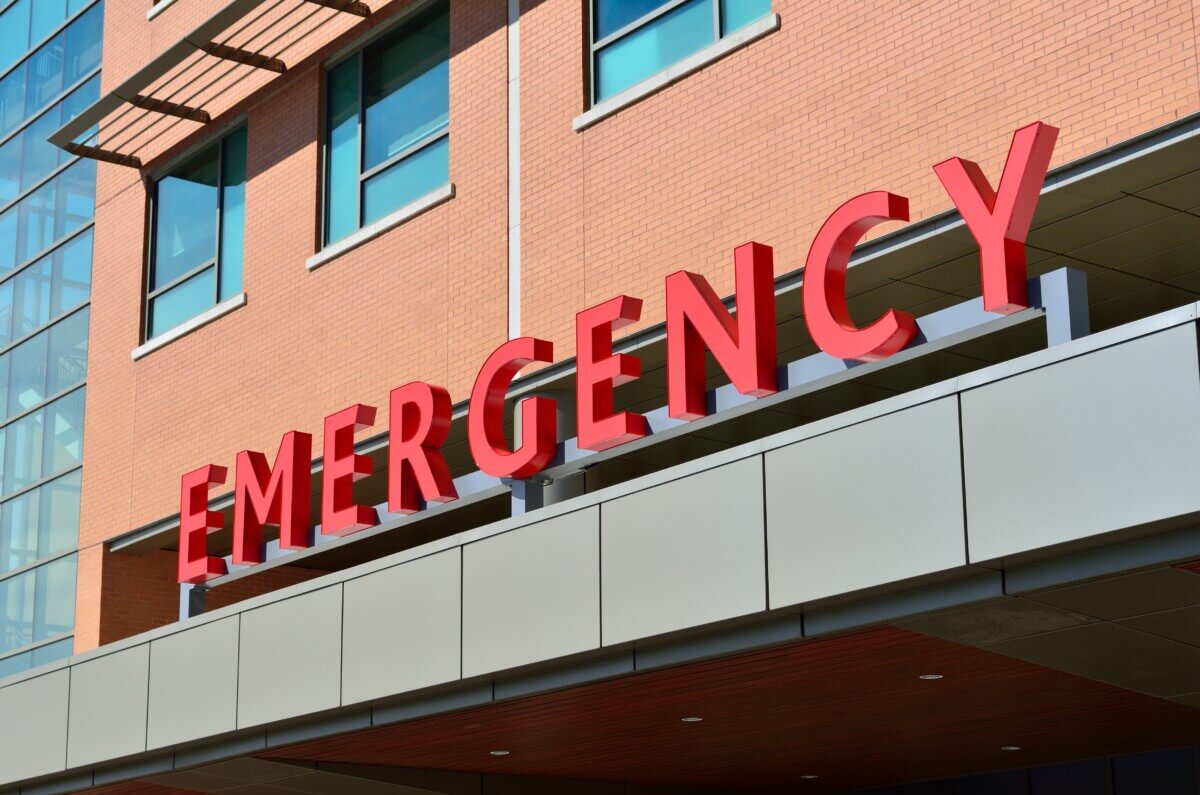
Emergency room sign on outside of building (Credit: Pixabay on pexels)
SAN FRANCISCO — There is a growing health crisis in the state of California — and a new report finds that it starts in the waiting rooms at local hospitals. Many patients probably wonder why are wait times so long in emergency departments (EDs) in California. The new study sheds light on the challenges facing the state’s healthcare system, due to more patients needing treatment and fewer places to treat them.
The research, conducted by the University of California – San Francisco (UCSF) followed emergency medicine patterns in California over the past decade. It discovered that while the number of ED visits rose by 7.4 percent, the number of actual emergency rooms decreased by nearly four percent. Alarmingly, high-severity visits saw a staggering increase of almost 68 percent, while low-severity visits declined by 63 percent.
“We know that there is overcrowding in the ED,” says lead author Renee Y. Hsia, MD, a UCSF professor of emergency medicine, in a university release. “Capacity has largely failed to match the rise in patient demand.”

Emergency departments have a crucial role in the healthcare system, serving as a safety net for uninsured individuals and providing care regardless of their ability to pay. However, the study revealed that California’s population grew by 4.2 percent, while the number of EDs decreased from 339 to 326. Additionally, the number of hospital beds declined by 2.5 percent, further exacerbating the strain on emergency services.
“Our findings show what many health care workers already know to be true: the burden on emergency departments across the state of California has intensified over the last 10-15 years,” Dr. Hsia reports.
She emphasizes the importance of increased ED capacity and strategic resource allocation as essential steps toward improving emergency department care and alleviating overcrowding.
The study is published in the journal JAMA Open Network.


The problem is primarily in the SF Bay area. Where open drug markets are fueling the overdoses.